Introduction
CNC (Computer Numerical Control) routers have transformed modern manufacturing, enabling precision machining of wood, metals, plastics, and composites with sub-millimeter accuracy. At the heart of every CNC machine lies a carefully engineered motion system — a combination of linear guides, ball screws, drive motors, and spindle assemblies that work together to translate digital designs into physical parts.
Whether you are building a desktop CNC for hobby engraving or a full-scale production router for industrial machining, selecting the right motion components directly impacts your machine's precision, speed, rigidity, and service life. This guide covers the key components, their selection criteria, and how they interact within a complete CNC motion system.
1. Linear Guide Rails — The Foundation of Precision
Linear guides provide the constrained linear motion that allows the cutting tool to move with precision along each axis. They must handle both the static weight of the gantry and the dynamic cutting forces generated during operation.
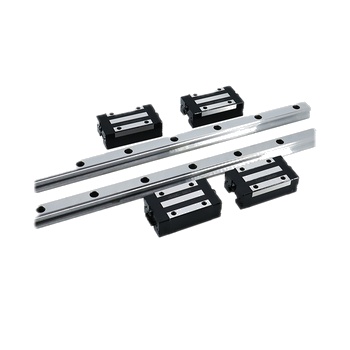
Square Rail vs. Round Rail
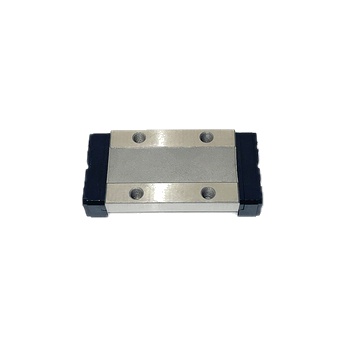
HGR / MGR Series (Square Rail) — These profile rail guides use a four-row ball recirculation design that provides equal load capacity in all directions (radial, reverse radial, and lateral). With precision-ground raceways and preloaded ball circuits, HGR rails achieve positioning accuracy within ±0.003mm per meter. They are ideal for CNC routers, machining centers, and any application requiring high rigidity and precision.
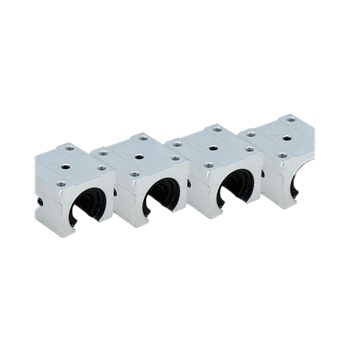
SBR Series (Round Rail) — These use supported round shafts with open linear bearings. They are more tolerant of mounting surface irregularities and cost significantly less than profile rails. SBR rails are commonly used in lighter-duty CNC routers, 3D printers, and material handling equipment where moderate precision (±0.01mm) is acceptable.
2. Ball Screws — Converting Rotation to Linear Motion
Ball screws convert the rotary motion of stepper or servo motors into precise linear displacement. Inside the ball nut, recirculating steel balls roll between the screw shaft and nut threads, achieving over 90% mechanical efficiency compared to 30-50% for lead screws.
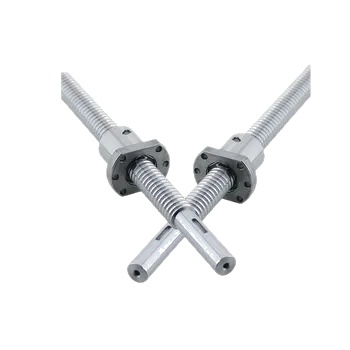
Key Selection Parameters
- Diameter (12mm–32mm): Larger diameters handle higher axial loads and allow longer spans without whip. For a 1500mm travel CNC, 20–25mm diameter is typical.
- Lead (5mm–25mm): The distance traveled per revolution. A 5mm lead provides finer resolution; a 25mm lead enables faster rapids. Balance resolution against traverse speed for your application.
- Accuracy Grade (C3–C7): C3 ground screws achieve 8μm lead deviation per 300mm — suitable for precision CNC. C7 rolled screws are more economical at 52μm deviation, ideal for general-purpose routers.
- Preload & Backlash: Preloaded double nuts eliminate backlash — critical for CNC contouring where direction reversals must not produce positioning errors.
3. Spindle Motors — The Cutting Power
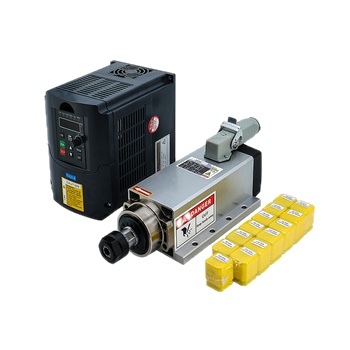
The spindle motor is the "business end" of any CNC machine — it holds and rotates the cutting tool at the speeds and torque required by the material being machined.
Air-Cooled vs. Water-Cooled
Air-cooled spindles use an integrated fan and are simpler to set up — no pump, radiator, or hoses required. They run slightly louder and at higher temperatures during extended operation, but are preferred for portable and small-shop CNC builds.
Water-cooled spindles circulate coolant through a jacket around the motor, maintaining lower bearing temperatures during prolonged high-RPM runs. This extends bearing life and enables quieter operation. A water chiller or radiator with pump is required.
4. Drive Motors & Motion Control
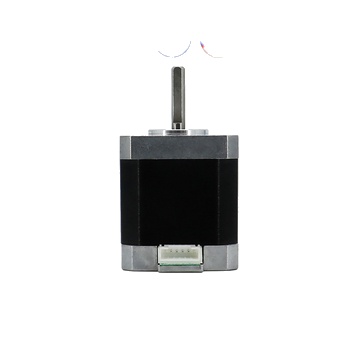
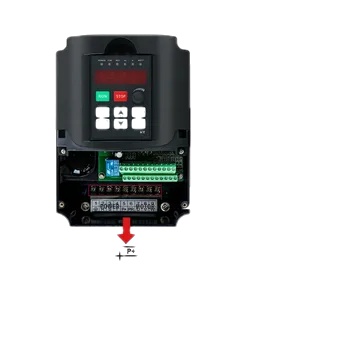
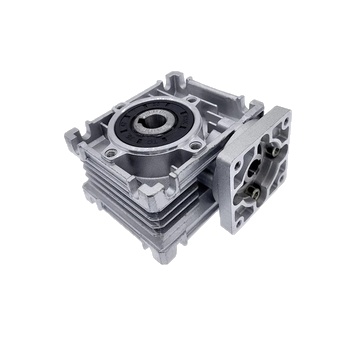
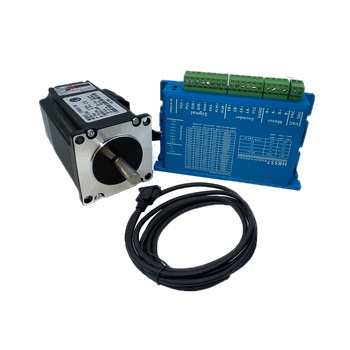
Modern CNC machines predominantly use stepper motors or servo motors to drive each axis. The choice between open-loop steppers, closed-loop steppers, and AC servos depends on your speed, torque, and accuracy requirements.
Stepper Motor Sizing
| Frame Size | Holding Torque | Typical Application |
|---|---|---|
| Nema17 | 0.28–0.55 Nm | Desktop CNC, 3D printers, small engravers |
| Nema23 | 1.2–3.0 Nm | Mid-size CNC routers, plasma cutters |
| Nema34 | 4.5–9.0 Nm | Large industrial CNC mills, heavy gantry routers |
5. Supporting Components & Accessories
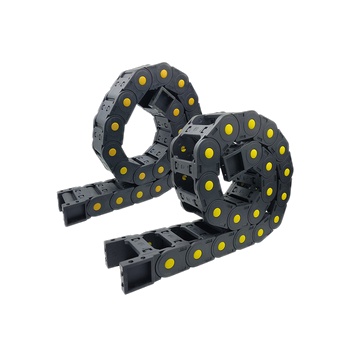
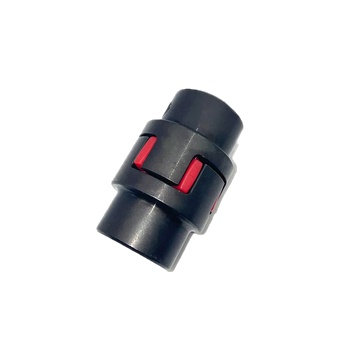
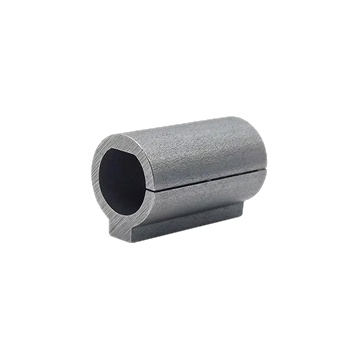
Beyond the main motion components, a well-engineered CNC machine requires cable drag chains to protect and guide power and signal wiring, flexible shaft couplings to connect motors to ball screws, limit sensors for homing and safety, dust covers to protect linear guides from debris, and proper motor mounts and bearing housings for rigid mechanical connections.
Building with Confidence
Building or upgrading a CNC router is an investment in precision manufacturing capability. The key to success lies in matching components to your specific requirements — not overspending on unnecessary precision, nor compromising on the critical elements that determine cut quality and machine longevity.
At YunYe Precision Parts, we stock a comprehensive range of HGR linear guide rails from 15mm to 65mm, SFU ball screws from 12mm to 32mm diameter with C3 to C7 accuracy grades, spindle motors from 0.5kW to 9kW in both air and water-cooled configurations, and complete stepper and servo drive solutions. Our engineering team can help you select the right components for your CNC build — from a desktop engraver to a full-scale production router.
YunYe Engineering Team
Precision Motion Specialists